
Client
Internal product
Case study
GameAIsle is a product problem disguised as five game problems: the platform has to make each game feel specific while making sessions, accounts, content, operations, and releases feel coherent.
Client
Internal product
Role
Product architecture, realtime systems, web/mobile delivery
Year
2026
Summary
Built an AI-native multiplayer game platform that brings five distinct party games together across a shared web and mobile architecture.
GameAIsle started with a deceptively simple promise: give a group one place to choose and play different kinds of party games. The hard part was not making five screens. It was deciding what the games could share without sanding away the reason someone would choose Track Rush instead of Logic Ladder, or Territory Duel instead of 5-Card Connect.
The platform needed to support a public catalog, game sessions, player identity, leaderboards, mobile releases, content operations, and a path to future creator tooling. It also needed to make the experience feel like one product rather than a collection of prototypes that happen to share a logo.
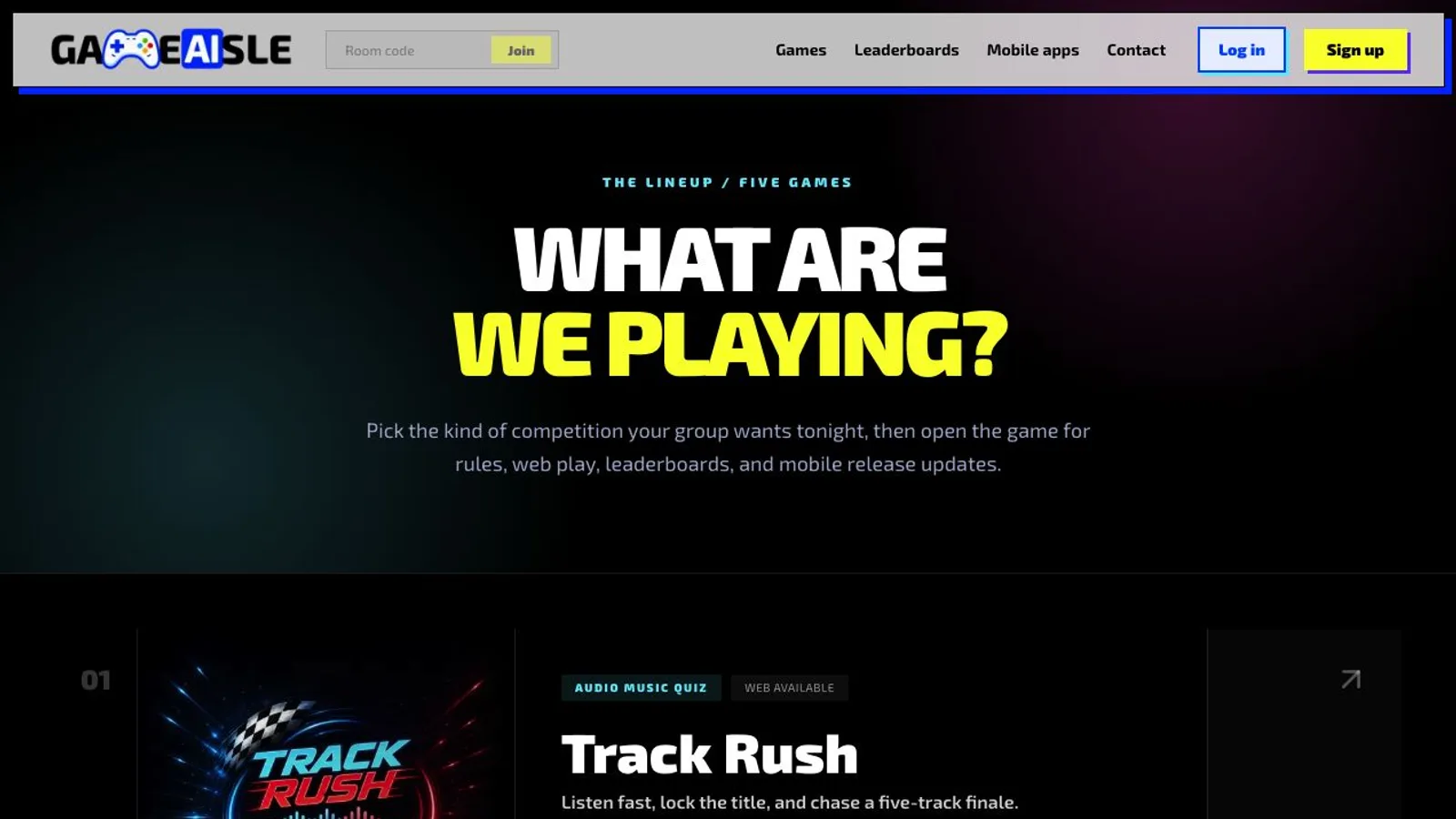
The rendered catalog keeps Track Rush, 5-Card Connect, Logic Ladder, Territory Duel, and Survey Showdown in one navigable platform.
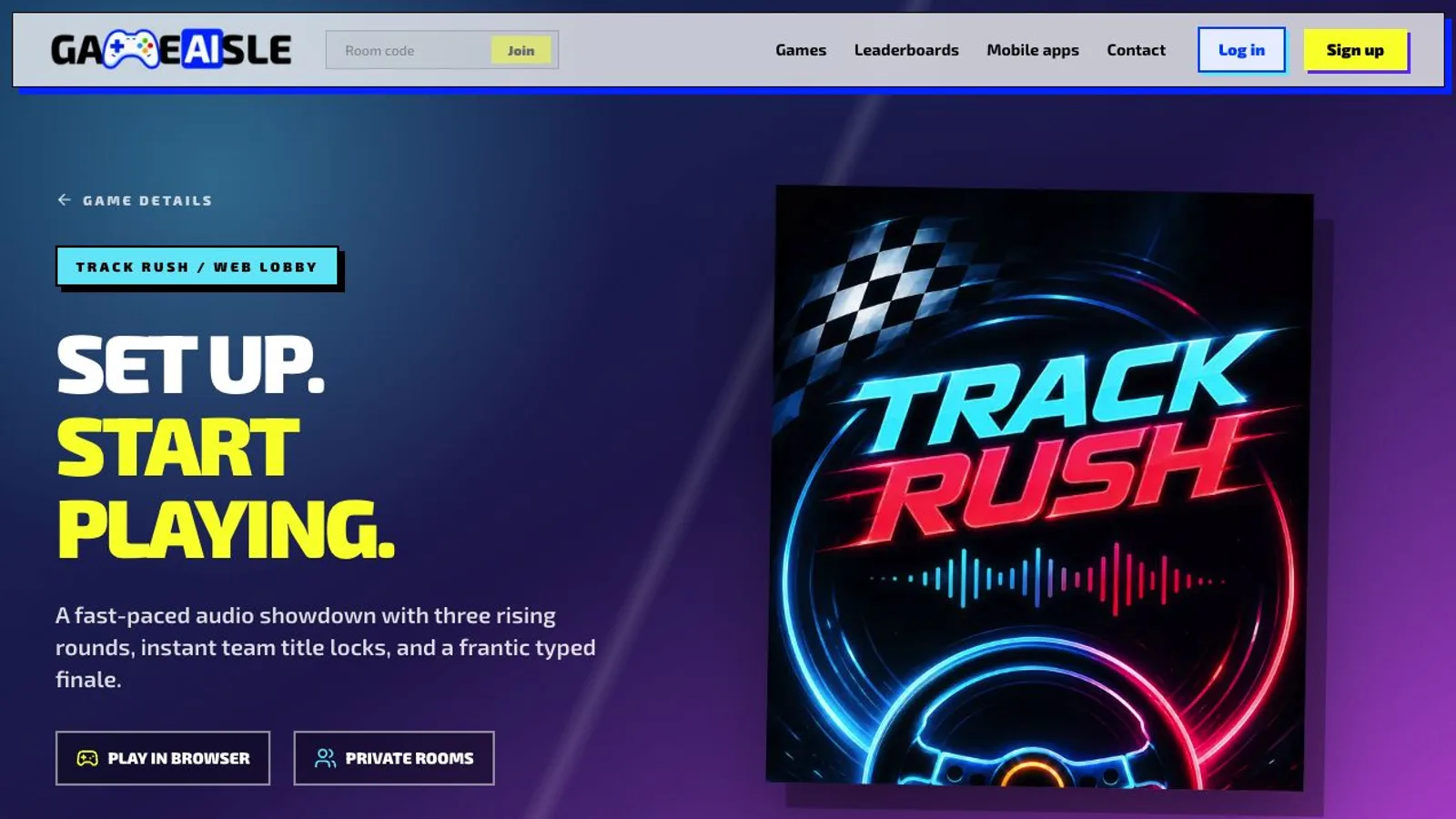
A music quiz surface built around quick recognition, title locks, and a fast typed finale.
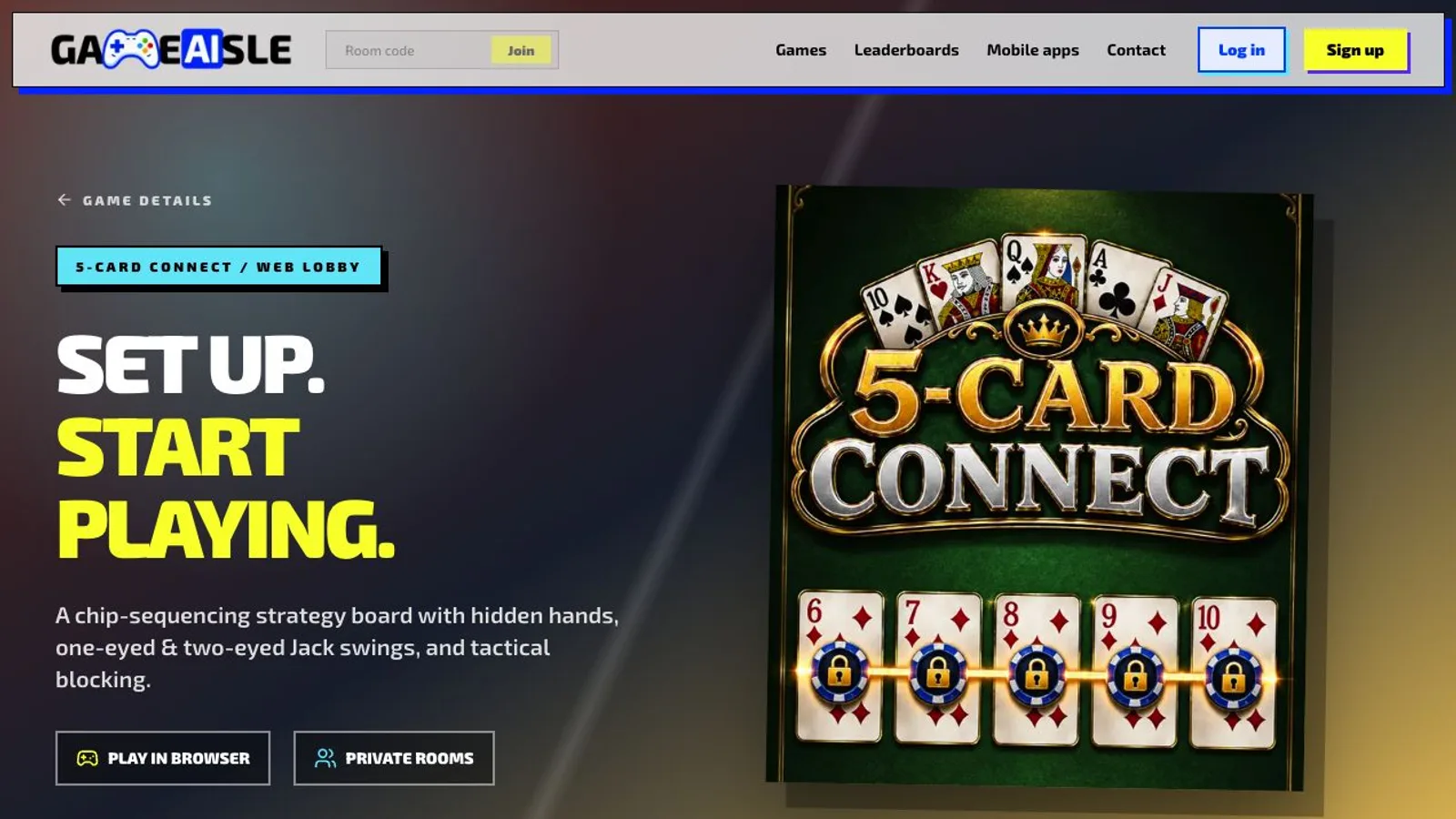
A strategy duel with private hands, card swings, and the pressure of completing a sequence.
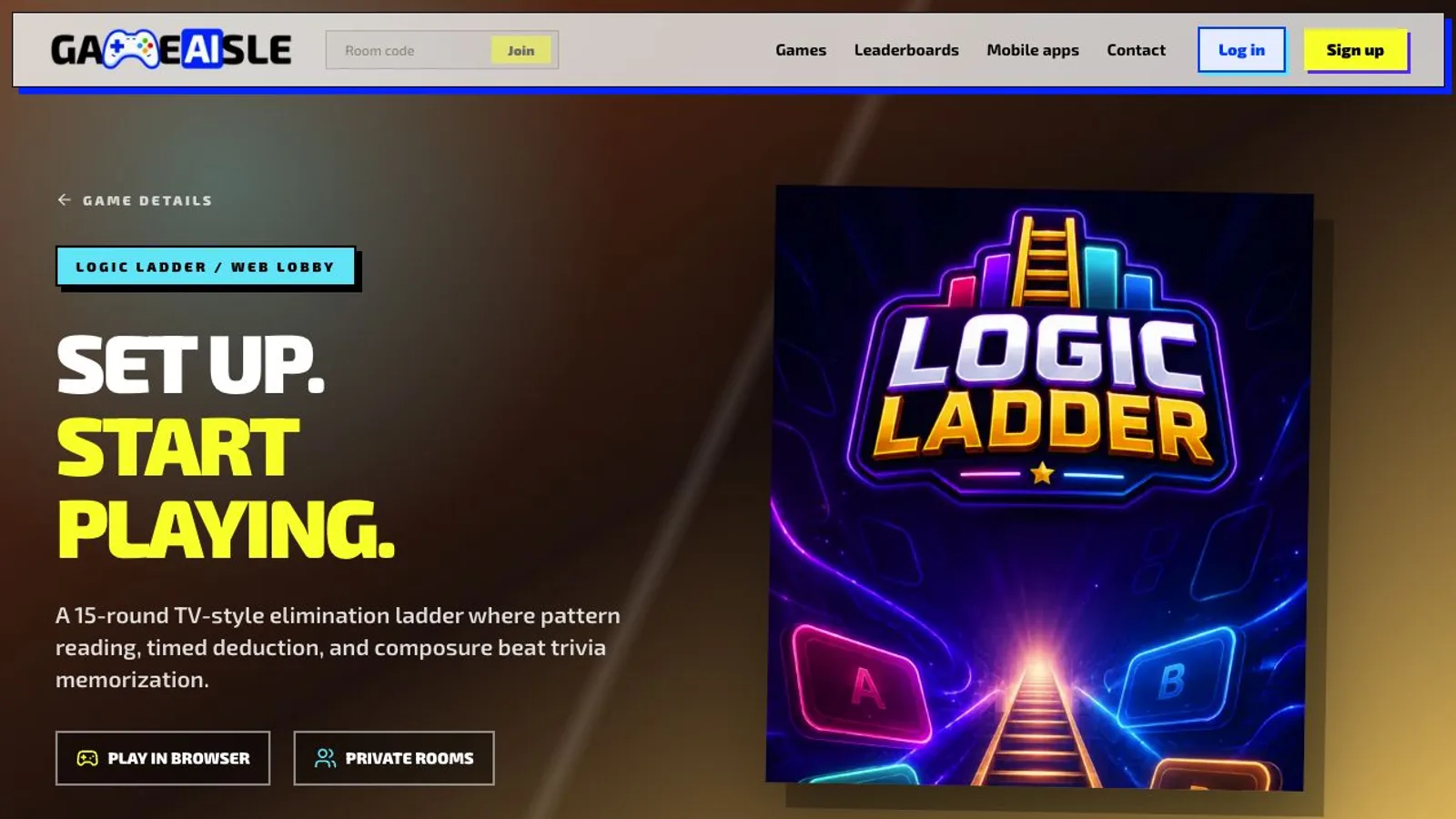
A 15-round elimination format where timed deduction and a limited pass shape the session.
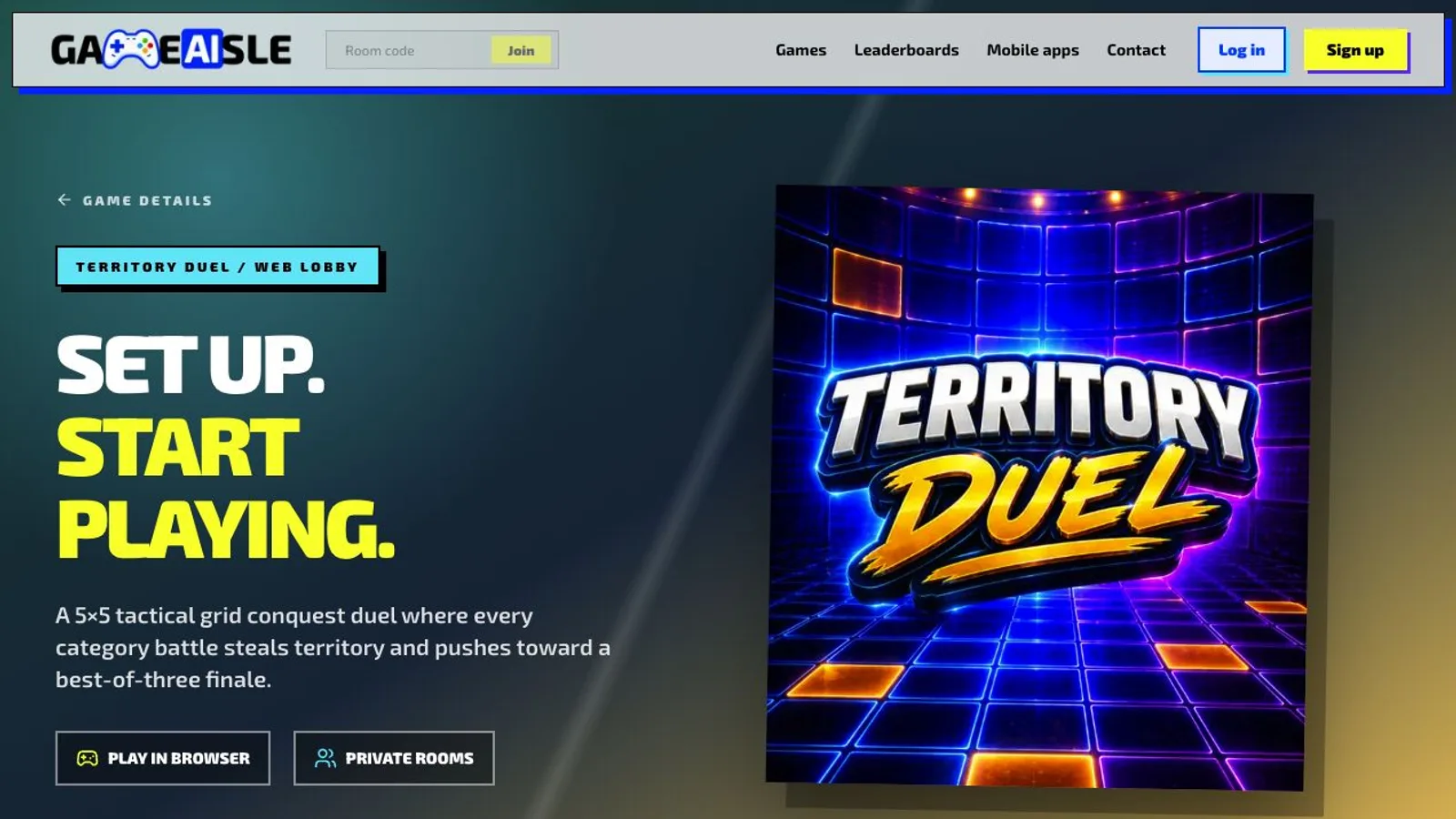
A 5 by 5 conquest board where category battles change the map and push toward a best-of-three finish.
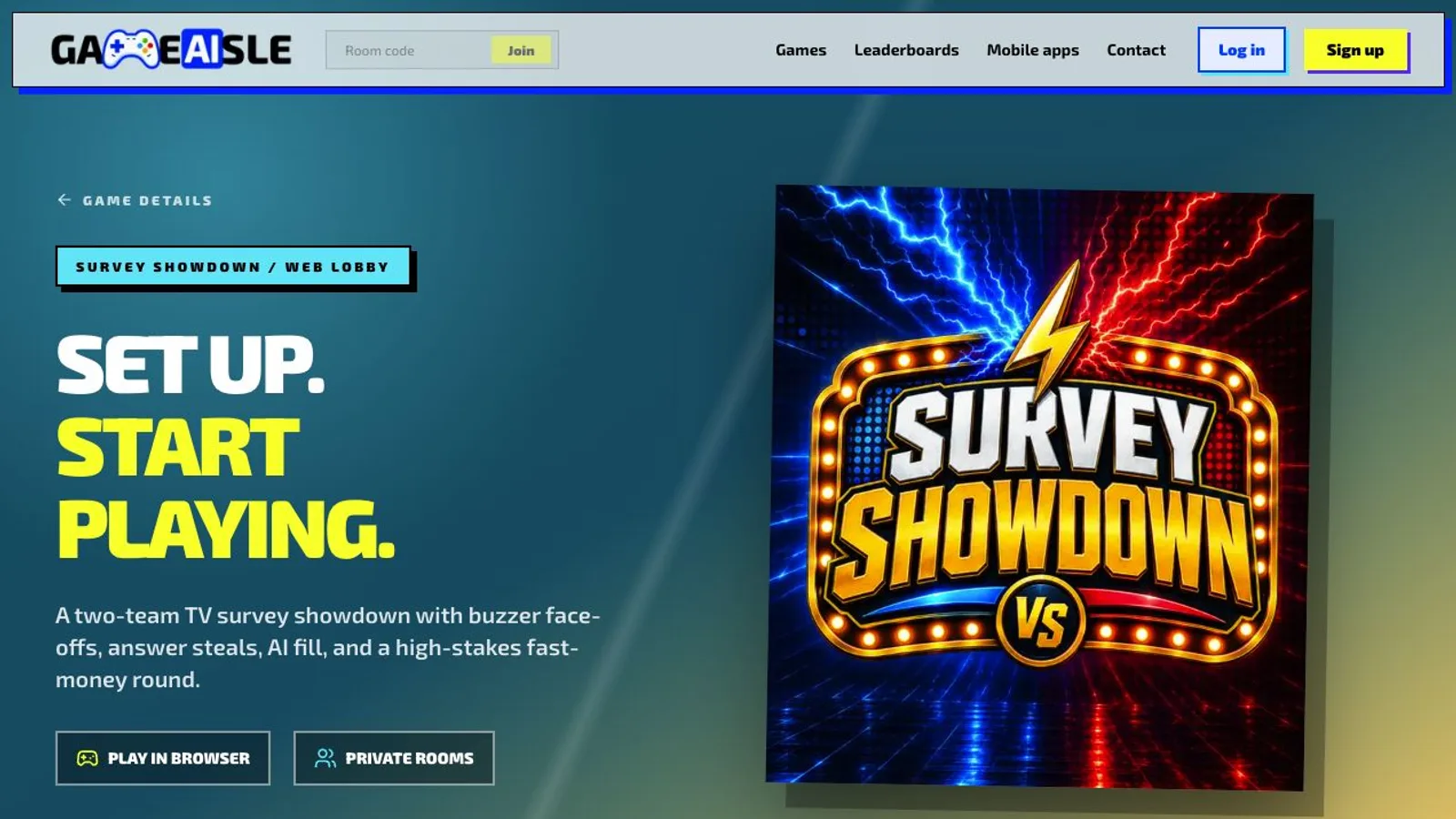
A two-team survey format with faceoffs, steals, and a private high-stakes Fast Money round.
The useful boundary was to share platform responsibilities while letting each game own its rules. Accounts, catalog navigation, session creation, player membership, transport, and release surfaces belong to GameAIsle as a platform. A game package owns its state shape, prompts, turn rules, scoring, and presentation. That gives five experiences a common way to enter and leave a session without forcing five different rulebooks into one generic component.
Realtime gameplay is server-authoritative. The client can present choices and optimistic affordances, but the server owns the state transition that matters: who may act, what action is valid, what the next state is, and which score should be persisted. The deterministic part is important because a multiplayer game needs the same answer when the same session state and action are replayed. It also gives debugging and review a concrete trail instead of asking an operator to trust whatever a client reported.
That architecture shows up differently in each game. Track Rush has audio recognition and a typed finale. 5-Card Connect has hidden hands and Jack behavior. Logic Ladder has an elimination ladder and a pass constraint. Territory Duel has adjacency and territory ownership. Survey Showdown has faceoffs, steals, and Fast Money. The platform can host them together because the game-specific rules stay explicit.
GameAIsle has a web player experience and one Expo source tree that can produce multiple branded mobile targets. That is a practical constraint, not just a reuse win: a session should not become a different product because a player arrived from a phone. Shared contracts for identity, API access, realtime events, assets, and game state keep the browser and mobile implementations aligned while each surface can still respect its own interaction patterns.
I treated mobile as a first-class delivery surface during the redesign. The web catalog makes the lineup legible, explains player counts and formats, and gives each game a clear route. The mobile experience keeps the same product vocabulary while making room for touch, device-safe layouts, and platform-specific release checks. The result is a system where the product promise remains recognizable across surfaces.
The games are only as good as the content and operations around them. The platform includes content pipelines for prompts, survey answers, media, and other game data, plus admin surfaces that make that content reviewable. Content is treated as a release input with validation and fallback behavior, not as an invisible pile of strings inside a component.
Release work has the same shape. The mobile targets have distinct identities, the web and API surfaces need compatible contracts, and a change to a shared package can affect every game. That makes build metadata, endpoint configuration, signed artifacts, and public readback part of product delivery. A successful local screen is not enough if the released game cannot establish its session or if an old asset route is still being served.
The redesigned experience gives the five games a clear home without hiding their differences. Players can understand the format before starting, open a specific game, and move through a consistent platform shell. Engineers get explicit seams between shared session infrastructure and game rules. Operators get content and release surfaces that expose what is being shipped.
GameAIsle is still an evolving product, but the foundation is now capable of carrying more than one successful demo. It is an AI-native multiplayer platform with a catalog, deterministic authority, shared web/mobile delivery, and the operational systems required to keep five games coherent as they grow.
Related writing
Five party games can share a platform without becoming the same game. The useful architecture keeps sessions, delivery, and operations common while leaving each rule system explicit.
Games make software feedback immediate. Building five of them sharpened how I think about iteration, device realities, content quality, and the difference between correct and genuinely enjoyable.
If an AI feature can change a customer decision, an operator workflow, or a safety boundary, its evaluation plan is part of the product requirement.
Relevant services
Builds and refactors for the parts of a platform that determine whether launches stay fast, reliable, and maintainable.
Custom app builds and integration work for teams that need systems to talk cleanly across HubSpot, internal tooling, and the rest of the stack.
Applied AI that improves delivery, diagnostics, reporting, and internal tooling without turning the stack into a science experiment.