
The heartbeat trap
Most monitoring setups are built around the most fundamental question in software: "Is it up?"
We define uptime through heartbeats, health checks, and resource metrics. Is the CPU high? Is the disk full? Is the service responding to a ping? These are vital, but they only tell you that the engine is running. They don't tell you if the car is actually heading toward your destination or if it's driving off a cliff in silence.
This is the difference between traditional monitoring and semantic observability. Monitoring reports on the health of the infrastructure; observability reports on the health of the process.
The cost of semantic blindness
When you rely solely on infrastructure heartbeats, you fall into the trap of semantic blindness. You know the service is responding, but you have no idea if it is doing the right thing.
This lack of signal leads to operational drag. When a system begins to drift—perhaps a data pipeline starts producing slightly malformed records, or a workflow begins stalling in a specific state—it doesn't trigger a traditional "system down" alert. Instead, it slowly degrades the quality of your operations.
By the time you notice the problem through manual intervention or downstream errors, the damage is already done. You spent days or weeks running a system that was technically "up" but functionally broken.
Patterns of high-signal instrumentation
To turn observability into a useful feedback loop, you need to instrument for signal, not just status. This means looking for patterns that indicate the quality of your system's behavior.
Aging and Latency in State
Don't just track if a task is "In Progress." Track how long it has been in that state.
A task that sits in "Pending" for three seconds is normal. A task that sits there for three hours is a signal that your processing logic is stalling or your capacity has hit a hidden ceiling. By measuring the "age" of active entities, you turn a static status into a dynamic indicator of system health.
Unexpected State Transitions
In a well-defined system, work should follow predictable paths. High-signal instrumentation looks for the outliers.
If a record usually moves from Created -> Validated -> Processed, you should instrument the unexpected jumps. Did it skip Validated? Did it loop between Processing and Error five times before succeeding? These transitions provide a much richer signal than a simple error count because they reveal the behavioral drift of your system.
Confidence Boundaries
When your system makes decisions—especially if those decisions are driven by heuristic or probabilistic models—you need to know how confident the system is in its current state.
By instrumenting "confidence scores" or "certainty levels" alongside your primary metrics, you create a boundary. When the system's average confidence drops, you know that while the system is still "up," its output is becoming increasingly unreliable.
The feedback loop in action
Imagine a workflow that manages inbound customer data. A traditional monitor tells you that the ingestion service is healthy and the database is reachable.
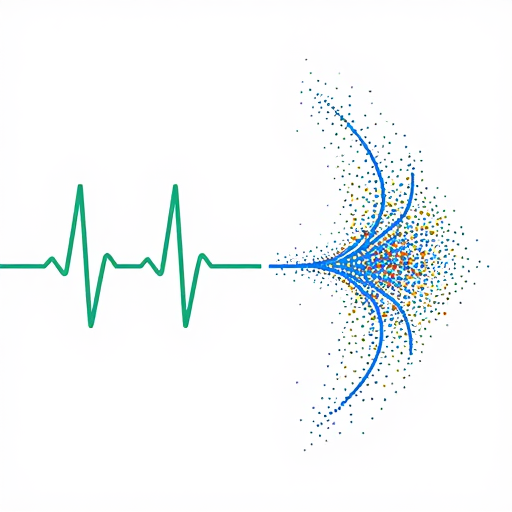
A semantic observability loop tells you something more: it shows that while the data is arriving, the "confidence score" of the parsed fields has dropped by 15% over the last hour, and the average time a record spends in the Review Required state has doubled.
This signal tells you exactly what to do: your parser is likely struggling with a new data format that hasn't been explicitly defined. You can fix the parser before the downstream systems start failing.
The practical takeaway
Observability is not just a tool for debugging incidents; it is the feedback loop that allows you to refine your system as it runs.
Stop asking "Is the system alive?" and start asking "Is the system behaving as intended?" By instrumenting for aging, state transitions, and confidence, you turn your operational data into a guide for continuous improvement.